Following the AI Impact Summit in India, dozens of countries including the U.S. signed a joint declaration on the use and development of AI. While the declaration is non-binding, it reflects broad support among nations for developing energy-efficient, trustworthy, and socially beneficial AI. Notably, the U.S. did not sign onto the previous AI joint declaration following last year’s AI summit in Paris.
Thank you for reading! Be sure to scroll down to see this week’s featured highlight, a new VFI video detailing Microsoft’s progress on meeting its renewable energy goals.
This Week in Washington
- Cybersecurity Dive: The Cybersecurity and Infrastructure Security Agency (CISA) will restructure much of the organization, including the cyber division, with a new priority of helping critical infrastructure organizations secure their technology. The restructure has not yet been implemented as the agency navigates the partial government shutdown.
- FedScoop: The Small Business Artificial Intelligence Advancement Act, a widely supported bipartisan bill to develop AI-utilization resources for small businesses, easily passed the U.S. House of Representatives. It now heads to the U.S. Senate for consideration.
- Nextgov: The Centers for Medicare and Medicaid Services’ (CMS) pilot AI fraud system has been a huge success, per CMS Chief Operating Officer Kim Brandt. She announced that the AI algorithm, which uses existing information to identify high-risk applicants, has saved more than $2 billion in its first year of deployment.
- Yahoo Finance: At his State of the Union address, President Trump announced a Ratepayer Protection Pledge, a new plan to require AI data centers to pay for or produce their own energy. Further details about the plan, which follows similar commitments from companies such as Microsoft, are expected.
Article Summary
- Microsoft on the Issues: Microsoft announced that it had met and exceeded its goal of expanding internet access to 250 million people by the end of 2025. The company’s efforts helped extend connectivity coverage to over 299 million people worldwide, including more than 124 million across Africa.
- Mississippi Today: The University of Mississippi Medical Center was hit by a significant, debilitating cyberattack that closed large parts of the institution’s major public hospital. Elective services and clinics throughout the system remained closed through the end of February, and full recovery is expected to take weeks to months.
- Bleeping Computer: UFP Technologies, a medical device company, disclosed to the Securities and Exchange Commission (SEC) that a cyberattack had compromised its IT and data systems. The company has not revealed if personal data was lost in the attack.
- CNN: Anthropic AI accused Chinese AI firms DeepSeek, Minimax, and Moonshot AI of stealing Anthropic’s capabilities by creating fraudulent accounts and running more than 16 million illicit exchanges with Anthropic’s Claude AI model. Anthropic’s U.S. rival OpenAI accused DeepSeek of similar tactics.
- StateScoop: Boston’s Department of Transportation is funding a new venture, the Boston Curb Lab, which will use AI to optimize street and curb design throughout the city. The new venture will run through the city’s Office of Emerging Technology.
Featured Highlight
- Voices for Innovation Video
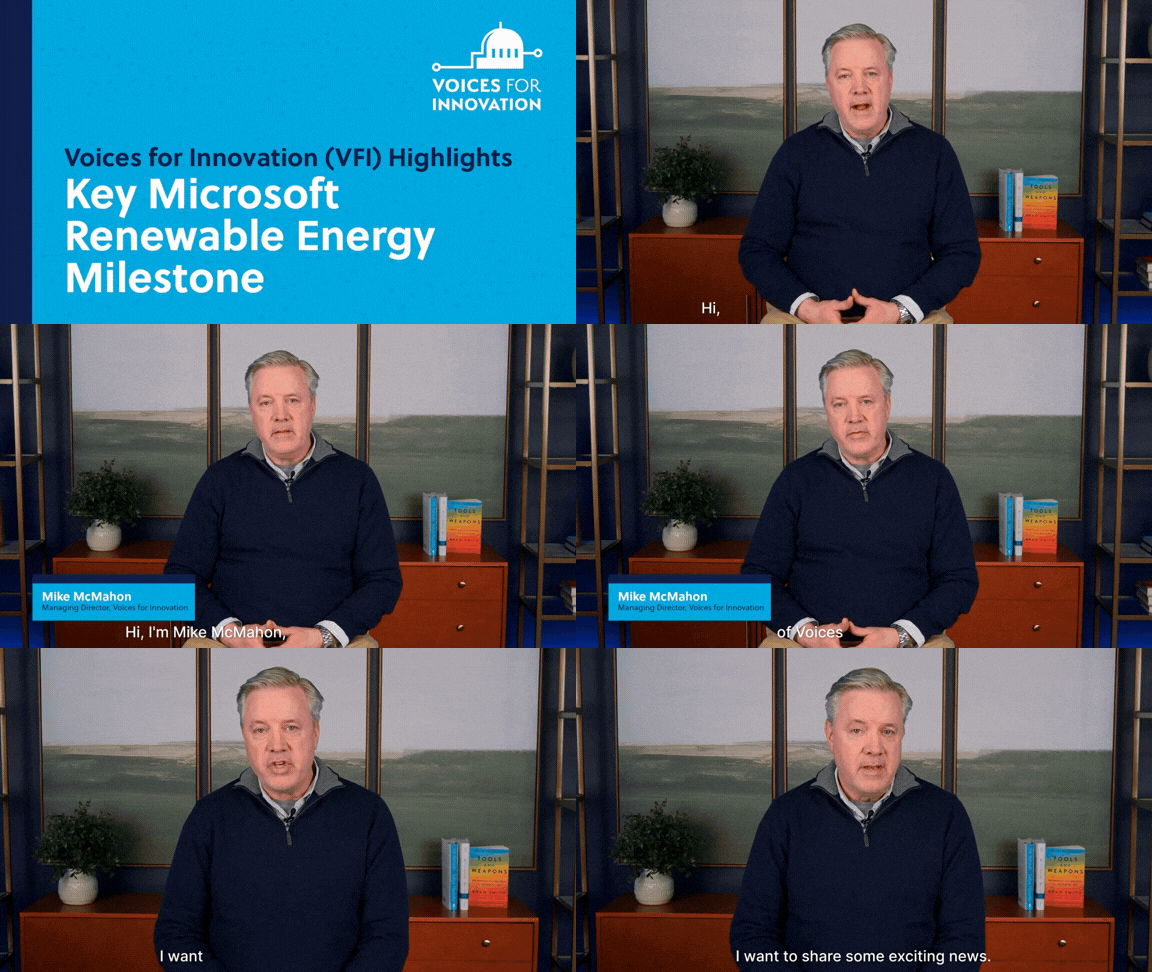
Microsoft announced it had met a key renewable energy goal. Voices for Innovation Managing Director Mike McMahon shares more information about what the announcement means for Microsoft and Voices for Innovation in the video below.
Note: Voices for Innovation regularly shares a range of opinion articles and press releases from organizations in and publications covering tech policy. These pieces are meant to educate our audience, not to endorse specific platforms or bills.